
Product data from the official website biossci.com · For selection reference only; specs & stock subject to the vendor.
Quick Specs
BBL-0103
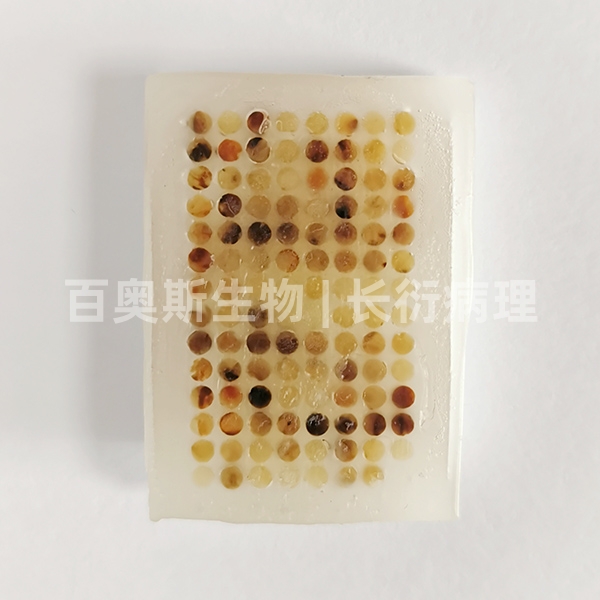
Paraffin embedding of tissue microarray sections
| Spec | — |
|---|---|
| Fixation | — |
| Applications | Zhang |
| Price | ¥5.00 |
| Stock | Please consult |
| Lead Time | 7天内 |
👁 Views 37 · 组织芯片制作 · 2026-10-05
Product Specifications
| Cat. No. | BBL-0103 |
|---|---|
| Cases | — |
| Cores | — |
| Core diameter | — |
| Section thickness | — |
| Fixation | — |
| Storage | — |
| Applications | Zhang |
Product Details
Service Introduction:
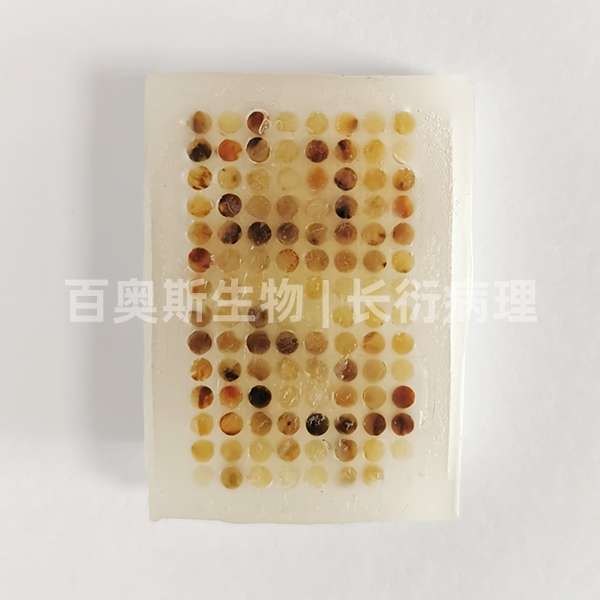
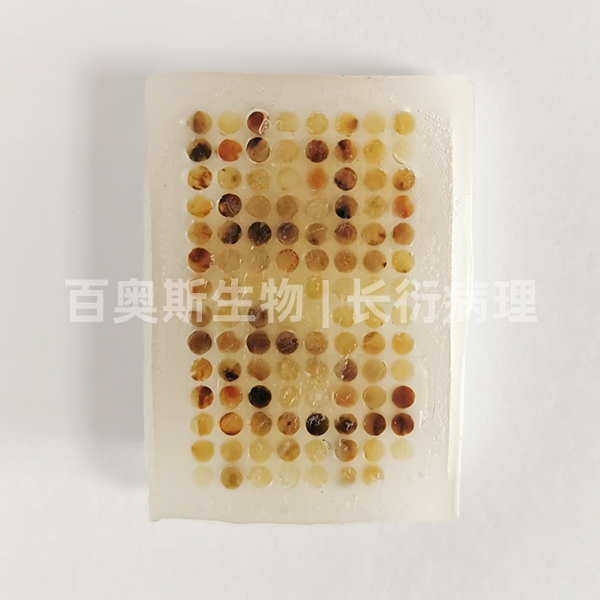
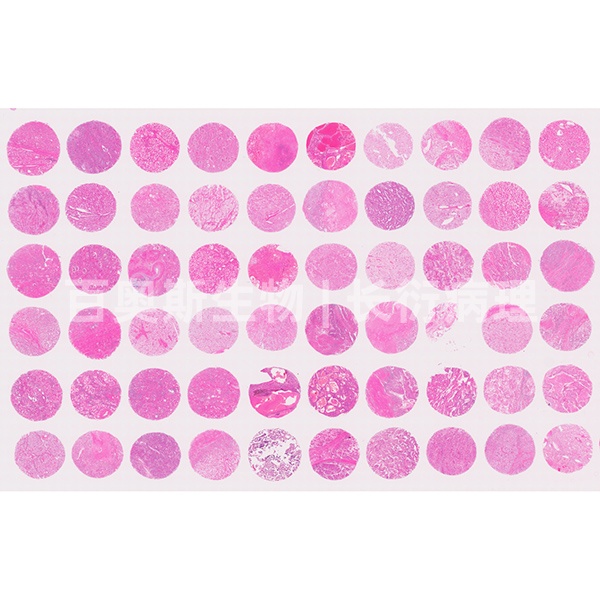
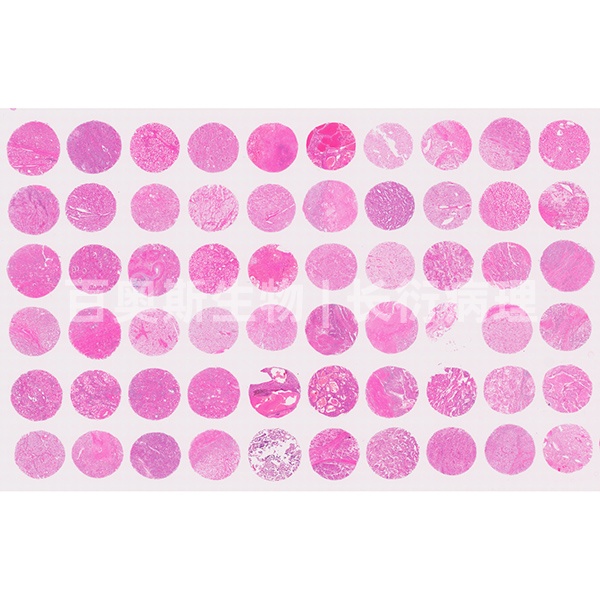
Tissue chip, also known as tissue microarray (TMA), is a tissue section prepared by arranging dozens to hundreds of small tissue cores in an orderly array on a single glass slide. It is most often custom-made from clinical tumor samples. Its greatest advantage is that during subsequent staining, the experimental conditions for the tissue samples on the chip remain consistent, saving time and reagents and facilitating unified analysis after scanning. Compared with staining individual sections, both staining time and cost can be reduced. The disadvantage is that the selected tissue area is relatively small and cannot comprehensively reflect the expression profile of individual samples.
Our company can provide the following core diameters and specifications:
Diameter Specification
1.0mm 14*22 (308 spots)
1.5mm 10*20 (200 spots)
2.0mm 8*15 (120 spots)
3.0mm 6*10 (60 spots)
5.0mm 4*6 (24 spots)
The commonly used core diameter is 2.0 mm. This service provides paraffin sealing of tissue microarray paraffin sections, which can prevent antigen loss and allow long-term storage of sections.
Main Applications:
Tissue microarrays have become a powerful tool in many research fields, including cancer research. They have been applied in clinical pathology and quality control of new antibodies.
Sample Requirements and Transport Conditions:
1. Provide properly fixed and qualified samples. After tissue removal, immediately fix the tissue in an appropriate fixative. The volume of fixative is recommended to be greater than 10-15 times the tissue volume. Fresh specimens should be fixed in suitable containers for 24-48 h; large specimens should be fixed for 12 h, then cut open and fixed further. Specimens should be fixed at room temperature (around 24°C) or refrigerated (4°C); do not freeze. Fixed samples should be transported at room temperature for submission.
Inquiry · BBL-0103
🎓 相关高校、实验室、医院与科研需求
Contact the Webmaster
WeChat ID
Open WeChat → Contacts → Add Contact → paste the ID above.