
Product data from the official website biossci.com · For selection reference only; specs & stock subject to the vendor.
Quick Specs
BBL-0111
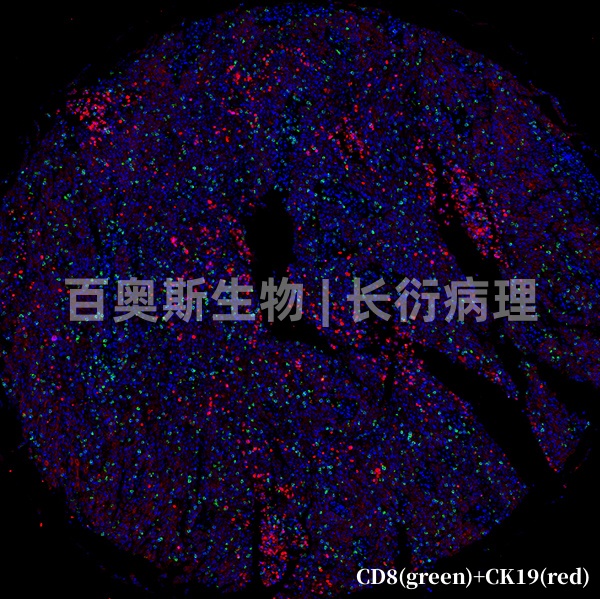
Tissue microarray immunofluorescence double-labeling (TSA method)
| Spec | — |
|---|---|
| Fixation | — |
| Applications | Zhang |
| Price | ¥1,000.00 |
| Stock | Please consult |
| Lead Time | 2周内 |
👁 Views 68 · 组织芯片免疫荧光 · 2026-10-05
Product Specifications
| Cat. No. | BBL-0111 |
|---|---|
| Cases | — |
| Cores | — |
| Core diameter | — |
| Section thickness | — |
| Fixation | — |
| Storage | — |
| Applications | Zhang |
Product Details
Service Introduction:
Multiplex immunohistochemistry (mIHC) is an important technical approach that has emerged in pathology research in recent years. It is a multiplex sequential immunostaining technique based on tyramide signal amplification (TSA) that can detect multiple target molecules in situ in cell or tissue samples. By studying the combinations and spatial relationships of these targets, their interaction mechanisms can be elucidated. This technique not only greatly improves the sensitivity of detected signals, but also solves the difficulty of detecting multiple biomarkers using primary antibodies from the same host species on the same section. Through quantitative pathological analysis, information on the types, components, and expression levels of various targets in situ in tissues and cells, as well as the spatial localization, qualitative and quantitative information of each target and its interactions, can be obtained. Comprehensive, systematic, intuitive, and scientific interpretation of this information is of great significance for studying the mechanisms of disease occurrence and progression, and for exploring effective methods for disease diagnosis and treatment.
Using the TSA method, this project can overcome the limitation of primary antibody host species and label two antigens on a single tissue microarray without the need to consider whether the primary antibodies are from the same species.
Main Applications:
1. Dual advantages of in situ visualization and quantitative analysis.
2. More comprehensive analysis: simultaneous analysis of drug targets and the tumor microenvironment.
3. Free combination of different targets, multiplex co-localization staining, and the ability to separate signals.
4. Revealing spatial positional relationships and distinguishing different cell subpopulations.
Detection Principle:
In the presence of hydrogen peroxide, enzymes such as horseradish peroxidase and alkaline phosphatase can catalyze a tyramide substrate into a highly reactive short-lived intermediate. Within a short time, the intermediate can covalently bind to electron-rich surfaces of surrounding proteins to form tyramide complexes. Because the adjacent proteins (such as HRP, antibodies, and target antigens) contain abundant tyrosine binding sites, they accumulate large amounts of signal, effectively amplifying the signal.
Experimental Workflow:
Rigorous experimental design for TSA-based multiplex immunofluorescence:
1. IHC immunohistochemistry preliminary experiment – antibody validation – customer confirmation of results.
2. IF immunofluorescence single-label preliminary experiment (TSA method) – validation of concentrations and color combination adjustment and optimization – customer confirmation of results (expression abundance).
Inquiry · BBL-0111
Related Products
BBL-0107
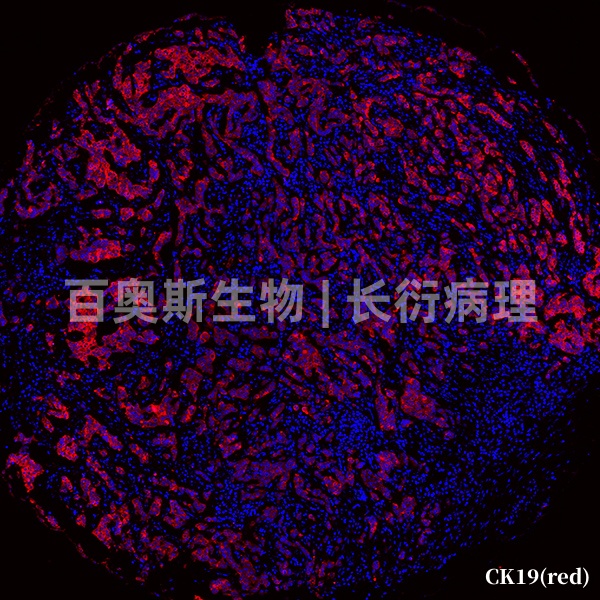
Tissue microarray immunofluorescence (IF) single labeling
BBL-0108
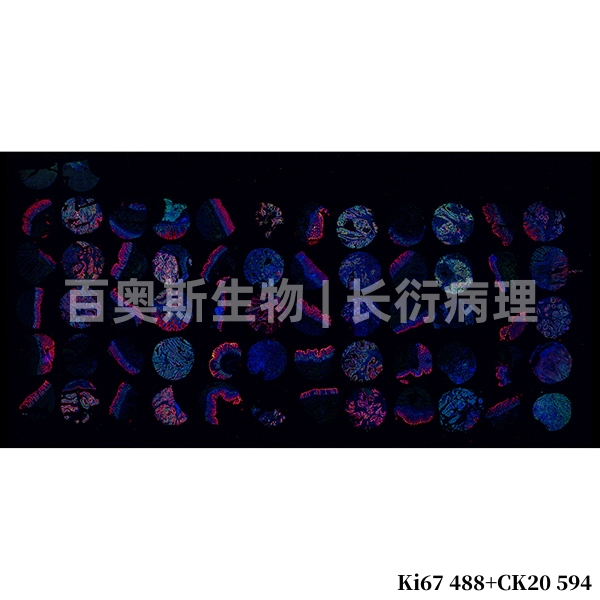
Tissue microarray immunofluorescence (IF) double labeling
BBL-0109
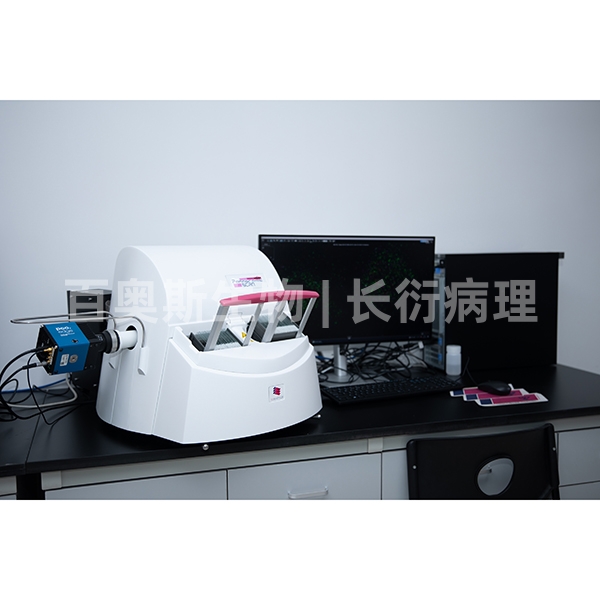
Tissue microarray triple immunofluorescence (IF) staining
BBL-0110
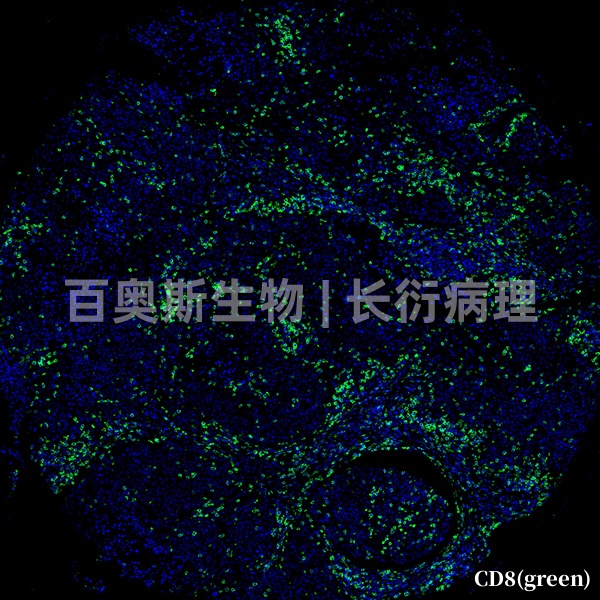
Tissue microarray immunofluorescence single labeling (TSA method)
🎓 相关高校、实验室、医院与科研需求
Contact the Webmaster
WeChat ID
Open WeChat → Contacts → Add Contact → paste the ID above.